

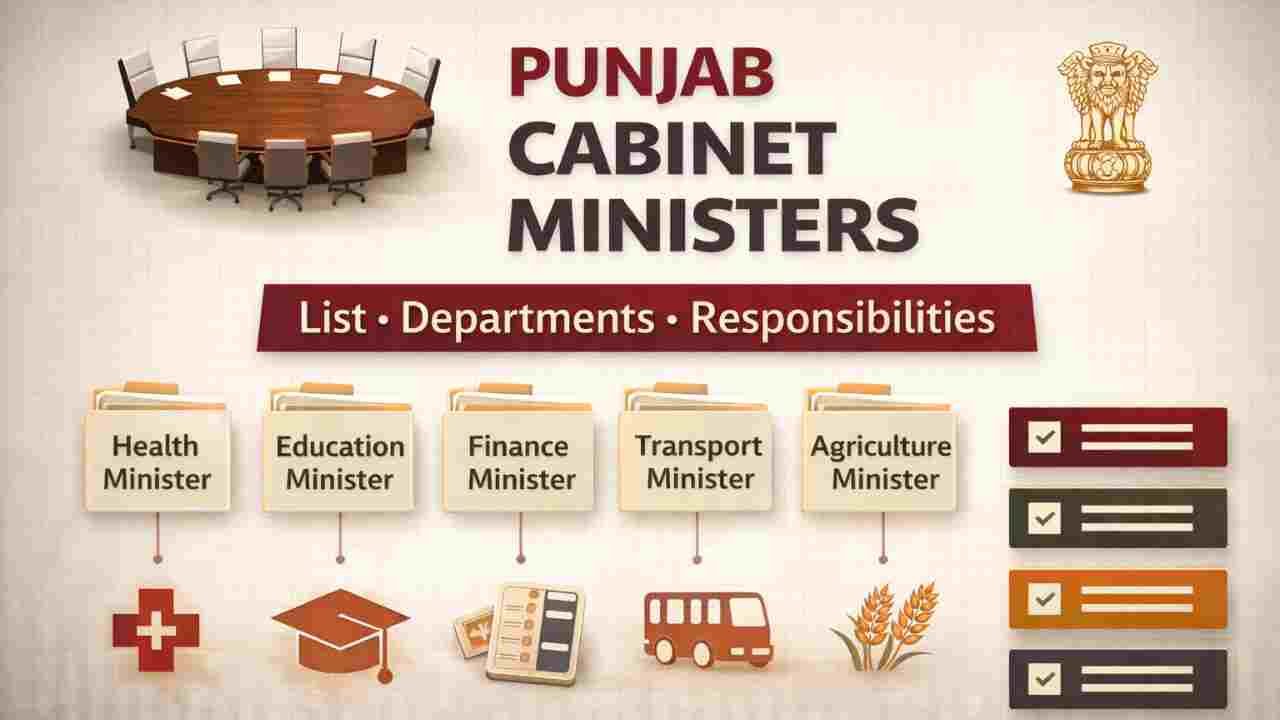
The Punjab state government functions through a structured system where responsibilities are distributed among elected leaders. At the core of this system is the Council of Ministers, commonly referred to as the Punjab Cabinet. Cabinet ministers play a vital role in policy formulation, administration, and implementation of government programs across various sectors.
This article provides a clear and educational overview of Punjab Cabinet Ministers and their responsibilities, explaining how portfolios are assigned, what roles ministers perform, and how the cabinet supports state governance. The focus remains informational and neutral, without political opinions or debates.
What Is the Punjab Cabinet?
The Punjab Cabinet is a group of senior ministers led by the Chief Minister. Together, they form the executive decision-making body of the state government.
Key characteristics of the Punjab Cabinet:
- Consists of elected representatives
- Responsible for major policy decisions
- Oversees government departments
- Works collectively under the Chief Minister
The cabinet ensures coordinated governance across departments.
Difference Between Council of Ministers and Cabinet
The Council of Ministers includes all ministers in the government, while the Cabinet is a smaller group within it.
Key differences:
- Cabinet includes senior ministers handling major departments
- Council of Ministers may include Ministers of State
- Cabinet takes key policy decisions
This structure helps manage governance efficiently.
How Cabinet Ministers Are Appointed
Cabinet ministers are appointed through a constitutional process.
The process includes:
- Selection by the Chief Minister
- Formal appointment
- Allocation of departmental portfolios
Appointments are based on administrative needs and representation.
What Is a Ministerial Portfolio?
A portfolio refers to the department or group of departments assigned to a minister.
A portfolio determines:
- Area of responsibility
- Policy oversight
- Administrative coordination
Each portfolio focuses on a specific sector of governance.
Major Departments Handled by Punjab Cabinet Ministers
Punjab Cabinet Ministers manage key departments that affect daily life and development.
Home Affairs
Responsibilities include:
- Internal security
- Coordination with law enforcement
- Maintenance of public order
This department focuses on safety and administrative coordination.
Finance
The Finance portfolio handles:
- State budget preparation
- Financial planning
- Revenue management
Financial discipline is essential for smooth governance.
Education
Education responsibilities cover:
- School education policy
- Higher education institutions
- Academic administration
This department supports human resource development.
Health and Family Welfare
Health-related responsibilities include:
- Public healthcare services
- Hospitals and medical infrastructure
- Health policy implementation
The focus is on accessible healthcare services.
Agriculture and Farmers’ Welfare
This portfolio manages:
- Agricultural development programs
- Farmer support initiatives
- Crop-related planning
Agriculture remains a key sector in Punjab.
Transport
Transport responsibilities include:
- Public transport systems
- Vehicle regulation
- Road safety administration
This department supports mobility and safety.
Rural Development and Panchayats
This portfolio focuses on:
- Rural infrastructure
- Local governance support
- Village-level development programs
It strengthens grassroots administration.
Social Welfare
Social welfare responsibilities include:
- Welfare programs
- Social security initiatives
- Support for disadvantaged groups
This department promotes inclusive development.
Role of Cabinet Ministers in Policy Making
Cabinet ministers contribute to policy development through:
- Departmental proposals
- Cabinet discussions
- Legislative participation
Policies are reviewed collectively before implementation.
Collective Responsibility of the Cabinet
One key principle of cabinet functioning is collective responsibility.
This means:
- Decisions are taken collectively
- All ministers support cabinet decisions
- Accountability is shared
This principle ensures unity in governance.
Interaction Between Cabinet Ministers and Departments
Cabinet ministers work closely with administrative officials.
Their interaction includes:
- Reviewing departmental performance
- Providing policy direction
- Monitoring implementation
Civil servants execute policies under ministerial guidance.
Cabinet Meetings and Decision-Making Process
Cabinet meetings are held regularly to discuss governance matters.
Typical agenda includes:
- Policy proposals
- Budgetary issues
- Inter-departmental coordination
Decisions are recorded and implemented systematically.
Importance of Cabinet Portfolios for Governance
Effective portfolio allocation ensures:
- Clear responsibility assignment
- Efficient administration
- Accountability
Well-defined portfolios improve service delivery.
Role of Cabinet Ministers in the Legislative Assembly
Cabinet ministers play active roles in the Vidhan Sabha.
Their responsibilities include:
- Answering assembly questions
- Introducing bills
- Participating in debates
This strengthens legislative accountability.
How Cabinet Ministers Represent Public Interests
Cabinet ministers represent:
- Constituency concerns
- Sector-specific interests
- State-level priorities
They balance local needs with broader governance goals.
Changes in Cabinet and Portfolio Allocation
Cabinet composition and portfolios may change due to:
- Administrative requirements
- Government restructuring
- Policy priorities
Such changes aim to improve governance efficiency.
Transparency and Accountability of Cabinet Ministers
Transparency is maintained through:
- Legislative oversight
- Public reporting
- Departmental audits
Accountability strengthens public trust.
Why Understanding Cabinet Roles Is Important for Citizens
Understanding cabinet responsibilities helps citizens:
- Identify the right department for issues
- Follow government decisions
- Engage more effectively with governance
Awareness promotes informed participation.
Frequently Asked Questions (FAQs)
Q1. Who leads the Punjab Cabinet?
The Chief Minister leads the Punjab Cabinet.
Q2. What is a cabinet portfolio?
It is the department or responsibility assigned to a cabinet minister.
Q3. Do cabinet ministers make decisions individually?
Major decisions are taken collectively by the cabinet.
Q4. Can cabinet portfolios change?
Yes. Portfolios may be reassigned when required.
Q5. Why is the cabinet important for governance?
It ensures coordinated policy-making and administration.
Conclusion
Punjab Cabinet Ministers play a central role in governing the state by managing key departments and shaping public policy. Through defined portfolios, collective responsibility, and coordination with administrative officials, the cabinet ensures effective governance and service delivery across Punjab.
This article serves as a neutral and educational guide to Punjab Cabinet Ministers and their responsibilities, helping citizens understand how executive leadership functions at the state level.
