
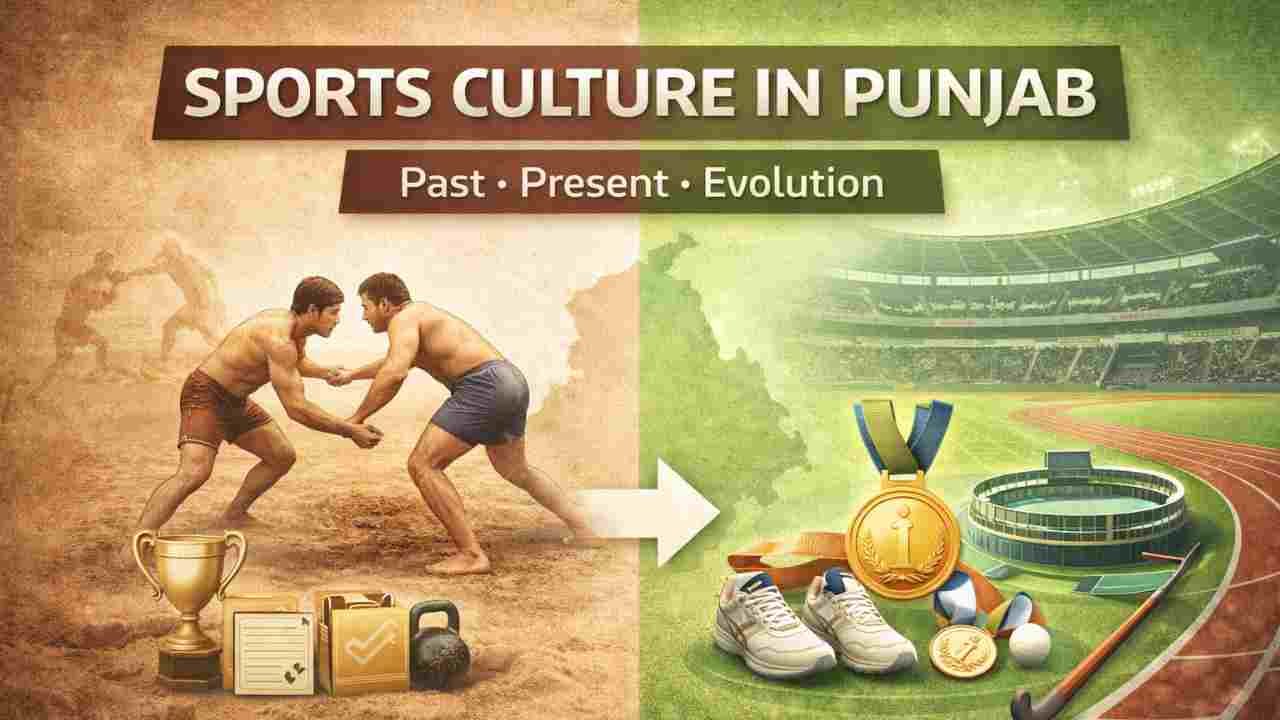
Punjab has a deep-rooted sports culture that reflects strength, discipline, and community spirit. From traditional village games to modern organized sports, physical activity has always been an essential part of life in the state. Over time, Punjab’s sports culture has evolved, blending traditional values with modern training systems and competitive structures.
This article provides a clear and educational overview of sports culture in Punjab, exploring how sports were practiced in the past, how they have transformed in the present, and why sports continue to play a vital role in Punjabi society. The focus is informational and cultural, without controversy or opinion.
Why Sports Are Central to Punjab’s Culture
Sports in Punjab are closely connected to daily life, traditions, and social structure. Physical strength and endurance were historically valued due to farming-based lifestyles.
Sports culture in Punjab promotes:
- Physical fitness and discipline
- Community bonding
- Mental strength and resilience
- Cultural identity
These values continue to influence sports participation today.
Sports Culture in Punjab: The Past
In earlier times, sports in Punjab were largely community-driven and practiced in open spaces.
Traditional Sports and Village Games
Traditional sports were simple but physically demanding.
Common traditional games included:
- Kabaddi
- Wrestling
- Tug-of-war
- Strength-based group games
These games required minimal equipment and emphasized stamina and teamwork.
Role of Akharas and Open Grounds
Akharas played an important role in training.
Their significance included:
- Physical conditioning
- Discipline and routine
- Skill development
Open fields and village grounds served as training and competition spaces.
Sports as Community Events
Sports events were often organized during festivals and gatherings.
Community involvement included:
- Friendly competitions
- Local tournaments
- Social celebration
Sports strengthened social unity and cultural pride.
Importance of Discipline in Traditional Sports
Discipline was a core element of traditional sports.
Athletes followed:
- Fixed training routines
- Physical conditioning practices
- Respect for trainers and rules
This discipline laid the foundation for modern sports training.
Transition From Traditional to Organized Sports
Over time, Punjab’s sports culture began to shift toward organized systems.
Key changes included:
- Introduction of formal rules
- Structured competitions
- Institutional involvement
This transition helped standardize training and performance.
Sports Culture in Punjab: The Present
Today, sports in Punjab are supported by organized institutions, academies, and infrastructure.
Growth of Sports Academies
Sports academies now play a major role.
They provide:
- Structured coaching
- Fitness and conditioning programs
- Competitive exposure
Academies help transform raw talent into trained athletes.
Role of Schools and Colleges
Educational institutions contribute significantly to sports development.
Their role includes:
- Physical education programs
- Inter-school and inter-college competitions
- Early talent identification
Education-based sports participation supports balanced development.
Expansion of Sports Infrastructure
Modern infrastructure has expanded across Punjab.
Examples include:
- Stadiums and sports complexes
- Training grounds
- Indoor facilities
Improved infrastructure supports higher training standards.
Popular Sports in Modern Punjab
Several sports enjoy widespread popularity today.
Commonly played sports include:
- Kabaddi
- Hockey
- Athletics
- Cricket
Both traditional and modern sports coexist in Punjab.
Influence of Fitness Culture
Fitness awareness has increased in recent years.
Modern fitness trends include:
- Strength training
- Endurance workouts
- Sports-specific conditioning
Fitness culture complements sports performance.
Role of Government and Institutions
Institutions support sports development through planning and programs.
Support includes:
- Infrastructure development
- Training initiatives
- Competitive platforms
Institutional involvement strengthens sports systems.
Community Participation in Modern Sports
Community involvement remains strong.
Forms of participation include:
- Local tournaments
- Youth sports programs
- Volunteer support
Community engagement keeps sports culture active.
Sports as a Career Option Today
Sports are increasingly seen as viable career paths.
Opportunities include:
- Competitive sports participation
- Coaching and training roles
- Sports administration
Career awareness has grown alongside structured training.
Balancing Tradition and Modernity
Punjab’s sports culture successfully balances old and new practices.
This balance includes:
- Preserving traditional games
- Adopting modern training methods
- Respecting cultural values
Balanced development ensures cultural continuity.
Challenges in Sports Culture Evolution
Despite growth, challenges remain.
Common challenges include:
- Access to facilities in some areas
- Need for trained coaches
- Maintaining traditional sports popularity
Addressing challenges supports sustainable growth.
Importance of Youth Participation
Youth involvement drives the future of sports culture.
Benefits include:
- Skill development
- Healthy lifestyle habits
- Long-term sports growth
Youth participation ensures continuity.
Social Impact of Sports in Punjab
Sports positively influence society.
Social benefits include:
- Discipline and teamwork
- Healthy competition
- Community unity
Sports contribute to overall social well-being.
Future of Sports Culture in Punjab
Sports culture in Punjab continues to evolve.
Future focus areas include:
- Improved grassroots training
- Expanded infrastructure
- Balanced support for traditional and modern sports
Sustained efforts ensure long-term success.
Frequently Asked Questions (FAQs)
Q1. Why is sports culture strong in Punjab?
Due to traditional lifestyle, discipline, and community involvement.
Q2. Are traditional sports still played today?
Yes. Traditional sports continue alongside modern sports.
Q3. How has sports culture changed over time?
It has shifted from informal community games to organized systems.
Q4. Do educational institutions support sports?
Yes. Schools and colleges play an important role.
Q5. What is the future of sports in Punjab?
Continued growth through training, infrastructure, and youth participation.
Conclusion
Sports culture in Punjab reflects a strong blend of tradition and modern development. From village games rooted in physical endurance to organized sports supported by academies and institutions, sports continue to shape identity, discipline, and community life in the state.
