

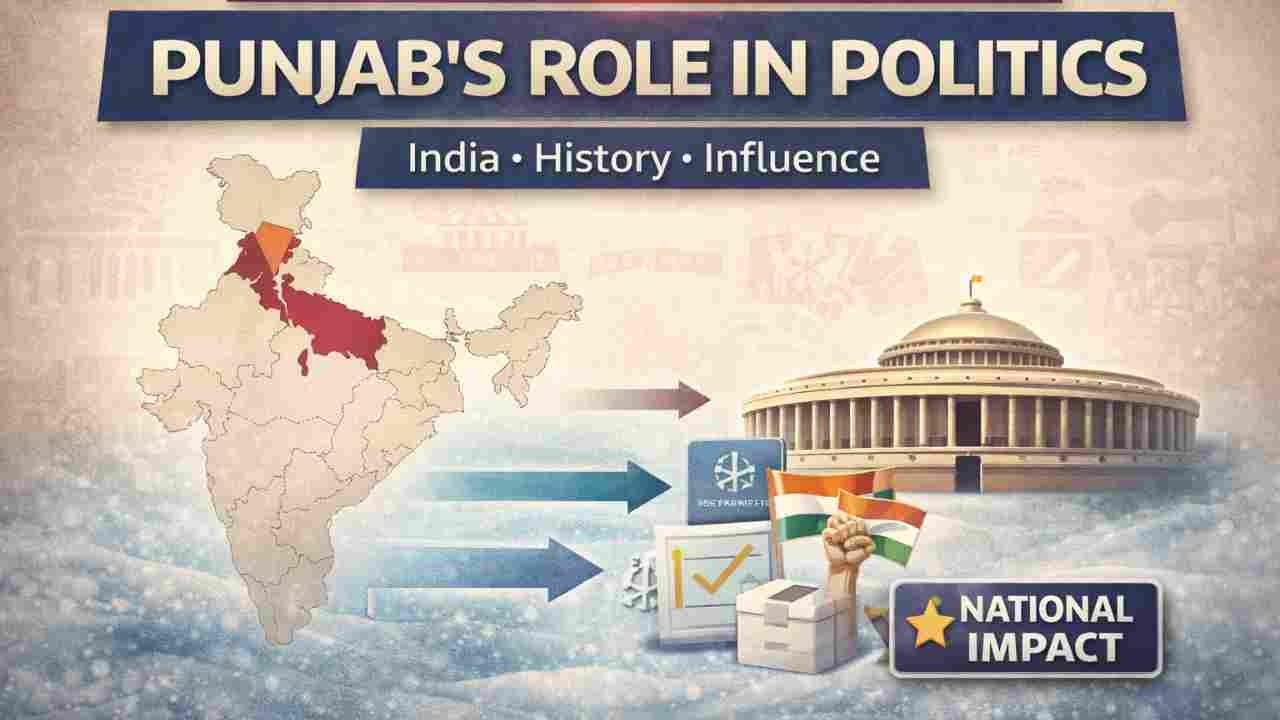
Punjab has played a significant and lasting role in shaping Indian politics. Due to its strategic location, strong social structure, and politically aware population, Punjab has consistently contributed to national political developments. From participation in democratic processes to representation in national institutions, the state has maintained an important presence in India’s political framework.
This article provides a neutral and educational overview of the role of Punjab in Indian politics, explaining historical influence, democratic participation, institutional representation, and contemporary relevance. The focus remains informational, without political opinions or party-based discussion.
Why Punjab Holds Political Importance in India
Punjab’s political importance is influenced by multiple factors.
Key reasons include:
- Strategic geographic location
- Strong democratic participation
- Social and cultural awareness
- Contribution to national institutions
These factors have helped Punjab maintain a visible role in Indian politics.
Historical Background of Punjab in Indian Politics
Punjab’s political engagement developed steadily during India’s democratic evolution.
Historical influences include:
- Participation in democratic movements
- Institutional development after independence
- Formation of representative governance structures
Punjab adapted its political systems in alignment with India’s constitutional framework.
Punjab’s Role in Parliamentary Democracy
Punjab actively participates in India’s parliamentary democracy through representation in national institutions.
Key aspects include:
- Representation in the Lok Sabha
- Participation in the Rajya Sabha
- Contribution to legislative discussions
This representation ensures Punjab’s voice at the national level.
Representation of Punjab in Lok Sabha
Punjab sends elected representatives to the Lok Sabha, India’s lower house of Parliament.
This representation:
- Reflects public mandate
- Raises regional concerns at the national level
- Contributes to law-making
Lok Sabha participation strengthens federal democracy.
Role of Punjab in Rajya Sabha
The Rajya Sabha represents states in India’s federal structure.
Punjab’s role includes:
- Representing state interests
- Participating in national policy discussions
- Supporting constitutional processes
This ensures balanced state representation.
Contribution to Federal Structure of India
India follows a federal system where states play a crucial role.
Punjab contributes by:
- Participating in inter-state coordination
- Supporting national policies
- Upholding constitutional values
Federal cooperation strengthens governance.
Democratic Participation in Punjab
Punjab has a politically aware population that actively participates in democratic processes.
Key indicators include:
- High voter awareness
- Regular participation in elections
- Engagement in public discussions
Active participation strengthens democracy.
Role of Punjab in Policy Discussions
Punjab contributes to national policy debates related to:
Common areas include:
- Agriculture and rural development
- Federal resource allocation
- Social welfare policies
Policy engagement reflects regional priorities.
Institutional Strength of Punjab’s Political System
Punjab’s political institutions function within constitutional norms.
Institutional features include:
- Elected legislative assembly
- Structured administrative systems
- Rule-based governance
Strong institutions support stability.
Punjab’s Influence Through Political Leadership
Punjab has produced leaders who contributed to national political processes.
Their influence includes:
- Participation in parliamentary committees
- Policy formulation roles
- Administrative leadership
Leadership strengthens national governance.
Role of Punjab in Electoral Processes
Punjab plays an important role in India’s electoral system.
Key aspects include:
- Conduct of free and fair elections
- Electoral participation
- Democratic accountability
Electoral integrity supports public trust.
Punjab and National Political Awareness
Political awareness in Punjab contributes to informed participation.
Factors include:
- Media engagement
- Educational awareness
- Public discourse
Awareness encourages responsible citizenship.
Challenges and Responsibilities in National Politics
Like all states, Punjab faces challenges while contributing to national politics.
Common challenges include:
- Balancing regional and national interests
- Policy coordination
- Administrative complexity
Addressing challenges strengthens cooperation.
Opportunities for Punjab in Indian Politics
Punjab continues to have opportunities for constructive contribution.
Opportunities include:
- Policy innovation
- Cooperative federalism
- Strengthening democratic institutions
Positive engagement supports national development.
Role of Youth in Punjab’s Political Future
Youth participation influences future political engagement.
Important factors include:
- Civic education
- Democratic awareness
- Institutional participation
Youth involvement shapes long-term political development.
Importance of Neutral Political Awareness
Understanding political roles without bias helps citizens.
Benefits include:
- Informed decision-making
- Respect for democratic institutions
- Constructive participation
Neutral awareness supports democracy.
Frequently Asked Questions (FAQs)
Q1. Why is Punjab important in Indian politics?
Punjab contributes through representation, policy participation, and democratic engagement.
Q2. How does Punjab participate in Parliament?
Through elected representatives in Lok Sabha and Rajya Sabha.
Q3. Does Punjab influence national policy?
Yes. Through legislative discussions and federal coordination.
Q4. Is political participation strong in Punjab?
Yes. Voter awareness and engagement are significant.
Q5. How does Punjab support India’s federal system?
By cooperating with national institutions and upholding constitutional values.
Conclusion
Punjab plays an important and constructive role in Indian politics through democratic participation, parliamentary representation, and institutional contribution. Its politically aware population and structured governance system help strengthen India’s federal democracy. Understanding Punjab’s role offers insight into how states contribute to national political stability and development.
This article provides a neutral and educational overview of Punjab’s role in Indian politics, focused on awareness and understanding rather than political debate.
