

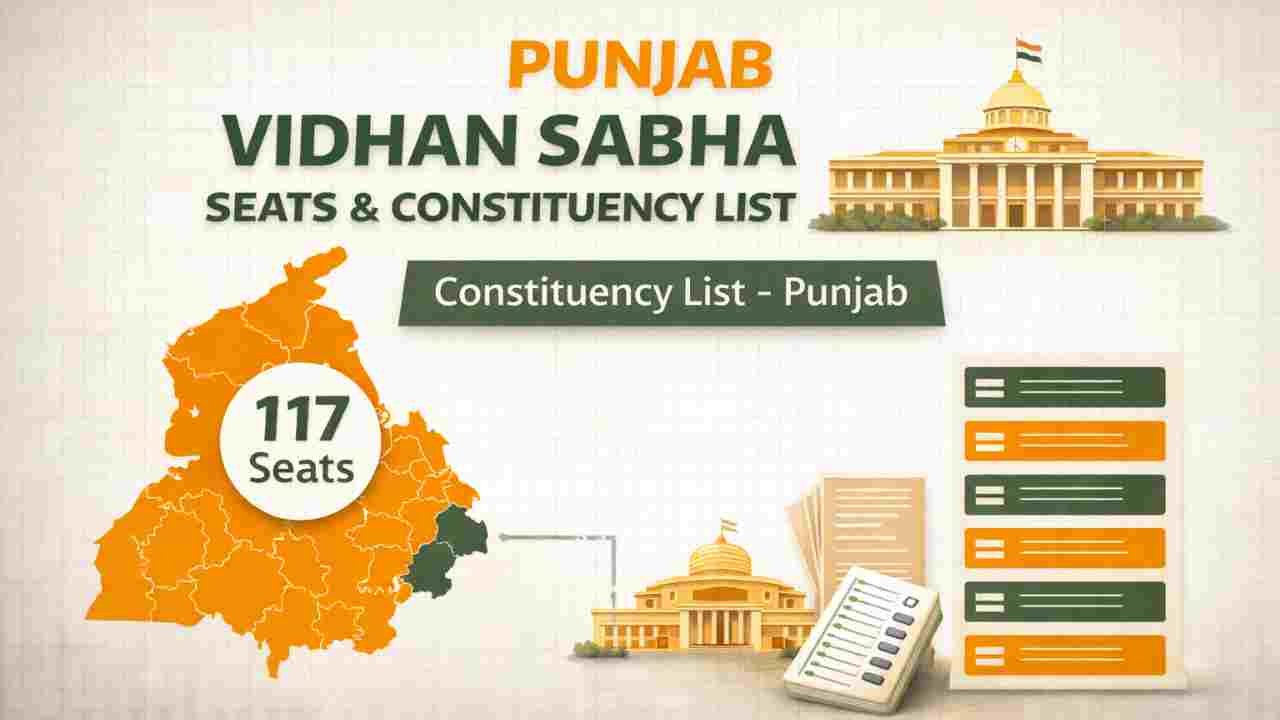
The Punjab Vidhan Sabha is the primary legislative body of the state and plays a central role in law-making and governance. Understanding the number of seats, how constituencies are structured, and how representation works helps citizens better understand the democratic framework of Punjab.
This article provides a clear and educational overview of Punjab Vidhan Sabha seats and constituency structure, including regional distribution, reservation system, and the role of constituencies in the legislative process. The focus is strictly informational, without political opinions or commentary.
What Is the Punjab Vidhan Sabha?
The Punjab Vidhan Sabha is the unicameral legislative assembly of the state. It consists of elected representatives who are chosen by voters from different constituencies across Punjab.
Key functions of the Vidhan Sabha include:
- Passing state laws
- Discussing public policies
- Approving the state budget
- Representing public interests
Members of the Vidhan Sabha serve as the link between citizens and the state government.
Total Number of Vidhan Sabha Seats in Punjab
Punjab Vidhan Sabha consists of 117 seats. Each seat represents one legislative constituency.
Important points about the seat structure:
- Each constituency elects one Member of the Legislative Assembly (MLA)
- All MLAs together form the Vidhan Sabha
- The number of seats is fixed and defined constitutionally
This structure ensures equal representation across regions.
What Is a Vidhan Sabha Constituency?
A Vidhan Sabha constituency is a defined geographical area from which voters elect one MLA. Constituencies are created to ensure balanced population representation and administrative convenience.
Each constituency:
- Has clearly defined boundaries
- Represents a segment of the population
- Participates independently in elections
Constituencies are periodically reviewed to maintain fairness.
How Constituencies Are Formed and Updated
Constituency boundaries are determined through a formal process to reflect population changes.
This process includes:
- Population data assessment
- Boundary adjustments
- Administrative review
The goal is to ensure each constituency represents a roughly equal number of voters.
Regional Distribution of Vidhan Sabha Constituencies
Punjab’s Vidhan Sabha constituencies are distributed across different regions of the state.
Major Regions Include:
- Majha region
- Doaba region
- Malwa region
Each region has multiple constituencies based on population and area size.
Importance of Regional Representation
Regional representation ensures that:
- Diverse local issues are addressed
- Different geographic areas have a voice
- Balanced development is encouraged
This system prevents concentration of representation in a single region.
Reserved Constituencies in Punjab Vidhan Sabha
Some constituencies are reserved for specific social categories to promote inclusive representation.
Reservation System Includes:
- Reserved seats for Scheduled Castes (SC)
- Open seats for general candidates
Reserved constituencies allow broader participation in governance.
Why Reservation in Constituencies Is Important
Reservation helps:
- Ensure representation for underrepresented groups
- Promote social inclusion
- Strengthen democratic fairness
Reserved seats rotate according to established guidelines.
Role of an MLA in a Constituency
Each constituency elects one MLA who represents local interests in the Vidhan Sabha.
Key responsibilities of an MLA include:
- Raising constituency issues in the assembly
- Participating in law-making
- Coordinating with government departments
- Supporting local development initiatives
MLAs act as a bridge between citizens and the government.
How Elections Are Conducted in Vidhan Sabha Constituencies
Vidhan Sabha elections are held at regular intervals.
Election process includes:
- Candidate nominations
- Campaigning within constituencies
- Voting by registered voters
- Counting and declaration of results
This process ensures democratic selection of representatives.
Role of Constituencies in Governance
Constituencies are the foundation of representative democracy.
They help:
- Channel local concerns to the state level
- Ensure accountability of elected representatives
- Encourage citizen participation
Strong constituency engagement strengthens governance.
Constituency-Level Administration
Each constituency works with local administrative units.
Coordination includes:
- District administration
- Local development offices
- Public service departments
This coordination supports effective service delivery.
Importance of Voter Awareness About Constituencies
Understanding one’s constituency helps voters:
- Know their representative
- Access government services
- Participate actively in elections
Informed voters contribute to a stronger democracy.
Changes in Constituency Boundaries Over Time
Constituency boundaries may change due to:
- Population growth
- Administrative restructuring
- Legal provisions
Such changes aim to maintain representation balance.
Difference Between Vidhan Sabha and Lok Sabha Constituencies
Vidhan Sabha constituencies differ from Lok Sabha constituencies.
Key differences:
- Vidhan Sabha constituencies elect MLAs
- Lok Sabha constituencies elect Members of Parliament (MPs)
- Vidhan Sabha focuses on state governance
Understanding this difference avoids confusion.
How Citizens Can Find Their Constituency Details
Citizens can identify their constituency by:
- Checking voter identification records
- Referring to official election resources
- Consulting local administrative offices
Knowing constituency details improves civic participation.
Role of Vidhan Sabha Seats in State Governance
Each Vidhan Sabha seat contributes to:
- Legislative decision-making
- Budget approval
- Policy discussions
Collective functioning ensures effective governance.
Frequently Asked Questions (FAQs)
Q1. How many Vidhan Sabha seats are there in Punjab?
Punjab Vidhan Sabha has 117 seats.
Q2. What is a Vidhan Sabha constituency?
It is a geographic area that elects one MLA to the state assembly.
Q3. Are there reserved constituencies in Punjab?
Yes. Some constituencies are reserved to ensure inclusive representation.
Q4. How often are Vidhan Sabha elections held?
Elections are held at regular constitutional intervals.
Q5. Why is constituency knowledge important for voters?
It helps voters understand representation and participate effectively.
Conclusion
Punjab Vidhan Sabha seats and constituencies form the backbone of the state’s democratic system. With 117 constituencies representing diverse regions and communities, the assembly ensures balanced representation and inclusive governance. Understanding constituency structure helps citizens engage more actively in democratic processes.
This article serves as a simple and educational guide to Punjab Vidhan Sabha seats and constituency structure, free from political bias and focused on awareness.
